Showing posts with label Electro Chemistry. Show all posts

Friday, 16 August 2019

Lupine Publishers | Molecular Characterization of Chikungunya Virus in Serum- Relevance for Disease Management

Lupine Publishers |Journal of Chemical Sciences

Abstract

Background: Chikungunya Virus is a single stranded RNA virus of the genus alphavirus. The transmission of this virus occurs by the bite of infected mosquitoes. It is characterized by an abrupt onset of fever frequently accompanied by joint pain.
Aim: Molecular Characterization of Chikungunya Virus in Serum- Relevance for Disease Management.
Methods and Materials: 30 cases were considered having symptom of fever suspected to have chikungunya. RNA was isolated from magnetic beads methods which were further studied for Real Time-PCR (RT-PCR).
Results: Among the 30 cases suspected for chikungunya fever, only 18 were positive for the same. Hence, the prevalence was calculated to be 60%. About 39% of the positive cases were in the age range of 21-40 years, which is the active age group of the total positive cases, 66.66% were males and 33.33% were females. The virus can be even transmitted together as a co-infection. Patients infected with chikunguniya virus are more likely to experience symptoms of high fever, severe polyarthralgia and rash with lymphopenia.
Keywords: Chikunguniya; Real time polymerase chain reaction; Aedes aegypti; Aedes albopictus
Abbrevations: CHIK V: Chikungunya Virus; CMRL: Central Molecular Research Laboratory; SGRRIM & HS: Shri Guru Ram Rai Institute of Medical & Health Science; CDNA: Complementary DNA; MRNA: Messenger RNA

Introduction

Chikungunya Virus (CHIKV) is an alphavirus with a positive sense single-stranded RNA genome of approximately 11.6kb, 60- 70nm diameter capsid and a phospholipid envelope. It is sensitive to desiccation and to temperatures above 58°C. It is a member of the Semliki Forest Virus complex. The transmission of this virus occurs with the bite of infected mosquitoes of the genus Aedes. In addition, blood born transmission is possible [1-3]. The incubation period ranges from 3 to 12 days. The onset is usually abrupt and the acute stage is characterized by sudden high fever, incapacitating arthralgia, myalgias and skin rash. Chronic arthritis may develop in the patients and is associated with fever, asthenia and exacerbation of arthralgia, inflammatory polyarthritis, and stiffness [4,5]. The Alphavirus group comprises of 28 viruses, six of which can cause human joint disorders-namely chikungunya virus, o’nyong-nyong virus (central Africa), Ross River and Barmah Forest viruses (Australia and the Pacific), Sindbis virus (cosmopolitan), and Mayaro virus (South America, French Guyana). These alphaviruses share certain antigenic determinants [6-9].

Materials and Methods

30 clinical samples were considered in this study. Blood samples were taken from the suspected cases of Chikungunya from the different departments of Shri mahant Indiresh Hospital, dehradun (Uttarakhand) and further processed at Central Molecular Research Laboratory (CMRL), Shri Guru Ram Rai Institute of Medical & Health science (SGRRIM & HS), Patel nagar, dehradun (U.K.) for the molecular characterization of Chikungunya Virus.

Collection of EDTA Blood & Separation of Serum/Plasma

Whole blood samples were centrifuged at 5,000rpm for 10- 15 minutes at 4°C. The serum was separated from blood & then subjected for nucleic acid extraction. Then Isolation of RNA for the detection of chikungunya virus was done by magnetic beads method where Magnetic carriers bearing an immobilized affinity or hydrophobic ligand or ion exchange groups or magnetic biopolymer particles having affinity to the isolated structure are mixed with the sample containing target compounds. The specimens with target nucleic acid are processed by lysis buffer and then the nucleic acids are efficiently bound to the specifically modified magnetic beads. The beads were removed from the solution and attached to the tube wall manually using a magnetic separator stand. After washing, purification and elution, ultra-purified RNA can be obtained. After RNA was obtained master mix was prepared for chikungunya RNA for qualitative detection by Real Time PCR. Reverse transcription was done (RT-PCR) for the extracted RNA specimens. In this method, RNA was first transcribed into complementary DNA (cDNA) by reverse transcriptase from total RNA or messenger RNA (mRNA). The cDNA is then used as the template for the qPCR reaction.

Results

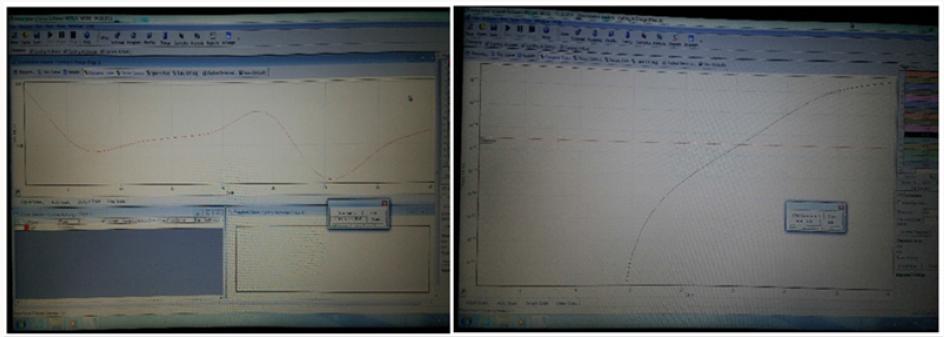
Among the 30 cases suspected for chikungunya fever, only 18 were positive for the same. Hence, the prevalence was calculated to be 60%. About 39% of the positive cases were in the age group ranging in between 21-40 years, which is the active age group of the total positive cases, 66.66% were males and 33.33% were females. Ct value in molecular profiling indicates that the sample is positive for chikungunya viral genome whereas no Ct value is indication of negative results for chikungunya. Ct value for internal control was in the range of 14-17 shows that the result is valid (Figure 1).
Figure 1: Amplification curves in Real time PCR for Chikungunya virus.
Lupinepublishers-openaccessjournals-chemical-science

Discussion and Conclusion

Chikungunya (CHIKV) is a mosquito-borne disease caused by an RNA alphavirus of the Togaviridae family. The main mosquito vectors are the aggressive Aedesaegypti and Aedesalbopictus. The most common presentation of CHIKV is acute onset of fever and polyarthralgia, sometimes followed by a macupopular rash. Other associated symptoms can include headache, myalgia, nausea and vomiting. These symptoms typically occur 3 to 7 days after the mosquito bite and generally last 7 to 10 days. Rare complication of CHIKV can include uveitis, retinitis, myocarditis, hepatitis, nephritis, bullos skin lesions, hemorrhage, meningoencephalitis. The clinical manifestations of CHIKV can be very similar to dengue fever, which is transmitted by the same species of the mosquito. The 2 viruses can be even transmitted together as a co-infection. Patients infected with CHIK are more likely to experience symptoms of high fever, severe polyarthralgia and rash with lymphopenia, whereas patients with dengue fever are more likely to have symptoms of hemorrhage, shock and death with associated laboratory derangements of neutropenia and thrombocytopenia. However, because of the close similarities, dengue fever should be strongly considered in the differential diagnosis of patients suspected with CHIK. Conformational testing for CHIK can be performed in one of the three ways. These methods include viral culture if tested within first three days of illness, PCR in the first eight days, or antibody serology after the first three days of illness. Other laboratory abnormalities may include lymphopenia, thrombocytopenia, elevated creatinine and elevated hepatic transaminases. Treatment is primarily supportive. The preventive measure among the individual level included the use of mosquito repellents like coils, body creams, mosquito nets, etc. At the community level, it is important to ensure that there are no collections of water in household vessels or around dwelling places. The usual recommendation is that on every fifth day, all the vessels, which contain water, should be emptied; this observance of a dry day breaks the life cycle of the mosquito [10].
From above discussion, we conclude that, Chikungunya fever is self-limiting, the morbidity can be very high in major outbreaks, resulting in heavy social and economic tolls. The prevention of the disease requires a planned approach, besides knowledge and awareness on the early warning signs. An integrated vector management through the elimination of the breeding sites, the use of anti-adult and anti-larval measures and personal protection will contribute to the prevention of outbreaks. A community empowerment and mobilization is crucial for the prevention and control of Chikungunya.

For more Lupine Publishers Open Access Journals Please visit our website: http://www.lupinepublishers.com/

For more Journal of Chemical Sciences articles Please Click Here: https://lupinepublishers.com/chemistry-journal/

To Know More About Open Access Publishers Please Click on Lupine Publishers: https://lupinepublishersgroup.com/

Tuesday, 9 April 2019

Journal of Chemistry and Chemical Sciences- Lupine Publishers

Analysis of Risk Associated with Hospital Waste Management Practices in Public Hospitals in Port Harcourt by Chukwu Okeah GO in Archives of Organic and Inorganic Chemical Sciences in Lupine Publishers

The study set out to investigate the risk associated with hospital waste management in Port Harcourt. To achieve this, five research questions and five research objectives alongside two hypotheses were put forth to guide the study. The study adopted the use of cross sectional survey research design. A total of 90 persons were purposively sampled from three public hospitals using the stratified sampling technique to ensure all the class of persons working in the hospital was captured in the study. Questionnaire was used as the data collection instrument in the study. The results from the study revealed that waste is generated often in the sampled hospitals, Liquids, human waste and sharps are the most generated waste in the hospitals, the major waste disposal method amongst the hospitals is the use of waste contractors and that the health risk associated with hospital waste is high.

https://www.lupinepublishers.com/chemistry-journal/fulltext/analysis-of-risk-associated-with-hospital-waste-management-practices-in-public-hospitals-in-port-harcourt.ID.000137.php


For more Lupine Publishers Open Access Journals Please visit our website: http://www.lupinepublishers.com/

For more Journal of Chemistry and Chemical Sciences articles Please Click Here: https://www.lupinepublishers.com/chemistry-journal/

Friday, 29 March 2019

Journal of Chemical Sciences - Lupine Publishers

Do Doubly Charged Monatomicanions Exist in Aqueous Solutions? by Yizhak Marcus Archives of Organic and Inorganic Chemical Sciences  in Lupine Publishers

The chalcogenide atoms (X = oxygen, sulfur, selenium, tellurium, polonium) form doubly charged monatomic anions, X2-, which exist in crystalline salts. The question arises whether, once such salts are dissolved in water, such species persist, or do they hydrolyze completely to form the hydrochalcogenide anion:
https://www.lupinepublishers.com/chemistry-journal/fulltext/do-doubly-charged-monatomicanions-exist-in-aqueous-solutions.ID.000134.php

For more Lupine Publishers Open Access Journals Please visit our website: http://www.lupinepublishers.com/

For more Journal of Chemical Sciences articles Please Click Here: https://www.lupinepublishers.com/chemistry-journal/

Tuesday, 12 March 2019

Chemistry Journals-Lupine Publishers

Influence of the Cr Content on the Corrosion Properties of a Series of Binary Cobalt-Chromium Alloys in Acidic Artificial Saliva by Estelle Kretz in Archives of Organic and Inorganic Chemical Sciences in Lupine Publishers

Cobalt-based alloys are more and more considered for dental applications, instead the expensive noble alloys and the other predominantly based alloys based on the allergen element nickel. These alloys frequently contain chromium to allow good resistance against corrosion as this may take place in the buccal milieu. The most often chromium is present in high quantity, close to 30wt. %, but it is maybe possible to decrease a little its contents without losing corrosion resistance. The aim of this study is exploring how the corrosion behavior of a cobalt alloy may vary versus its chromium content. In order to simplify this investigation only Co- xCrbinary alloys were considered, with x decreasing from 30 to 0wt.% by slices of 5wt.%. A series of seven alloys was synthesized by foundry under inert atmosphere and their behavior in corrosion in an artificial saliva of simple composition (NaCl 9g/L) acidified to pH=2.3 was specified using various classical electrochemical techniques (open circuit potential follow-up, Stern-Geary, Tafel, cyclic polarization). It appeared that passivation of the alloys occurred during the first two hours of immersion when the chromium content was 10 wt. % or higher, with as result high corrosion potentials and low corrosion current densities.

https://www.lupinepublishers.com/chemistry-journal/fulltext/influence-of-the-cr-content-on-the-corrosion-properties-of-a-series-of-binary-cobalt-chromium-alloys-in-acidic-artificial-saliva.ID.000128.php

For more Lupine Publishers Open Access Journals Please visit our website: http://www.lupinepublishers.com/

For more Chemistry Journals articles Please Click Here: https://www.lupinepublishers.com/chemistry-journal/

Friday, 8 March 2019

Research Journal of Chemical Sciences- Lupine Publishers

Identification of Modified and Unmodified Lipophilic B-Diketones Using Electrospray Ionisation Mass Spectrum (Esi-Ms) by Kaana Asemave in Archives of Organic and Inorganic Chemical Sciences in Lupine Publishers

Identification of modified and unmodified lipophilic p-dketone was carried out successfully using positive ion mode of ESI-MS. The ESI-MS spectra were obtained using LC - Agilent 1260 Infinity with MS - Bruker micro OF time of flight MS in mass range of m/z 200-900, capillary voltage 4500V, nebuliser pressure 21.8 psi, dry gas flow 8L/min and dry gas temp 433K. Potassium adduct ion 503.4437m/z was found for the 14,16-Hentriacontanedione (Htd); whereas, the itaconate modified Htd (Ita) gave a confirmatory sodium species 645.5051m/z. The ion 589.4794 m/z was for potassium species of the singly added acrylate modified Htd (Mas). Meanwhile, the doubly added acrylate modified Htd (Mad) formed the potassium adduct ion of 675.5179m/z. However, protonated species for these molecules were not obtained.

https://www.lupinepublishers.com/chemistry-journal/fulltext/identification-of-modified-and-unmodified-lipophilic-b-diketones-using-electrospray-lonisation-mass-spectrum-(Esi-Ms).ID.000127.php

For more Lupine Publishers Open Access Journals Please visit our website: http://www.lupinepublishers.com/

For more Research Journal of Chemical Sciences articles Please Click Here: https://www.lupinepublishers.com/chemistry-journal/

Wednesday, 26 December 2018

Dependence of Cadmium Sulfide Fluorescence on the Excitation Light Energy (AOICS) - Lupine Publishers


Dependence of Cadmium Sulfide Fluorescence on the Excitation Light Energy (AOICS) - Lupine Publishers

Monotonic dependence ofthe fluorescence band position on the exciting light energy has been shown in polycrystalline hexagonal cadmium sulfide at 293 K. The observed phenomenon is interpreted on the basis of a qualitative model assuming the emission levels initiation in the energy gap as a result of antibonding (Cd-S)*-orbital's occupation in the course of electron excitation.

https://www.lupinepublishers.com/chemistry-journal/fulltext/dependence-of-cadmium-sulfide-fluorescence-on-the-excitation-light-energy.ID.000116.php

For more Lupine Publishers Open Access Journals Please visit our website: http://www.lupinepublishers.com/

For open access chemistry journals articles Please Click Here: https://www.lupinepublishers.com/chemistry-journal/

Thursday, 15 November 2018

Liquid Chromatography-Mass Spectrometry and Its Applications: A Brief Review (AOICS)- Lupine Publishers

Liquid Chromatography-Mass Spectrometry and Its Applications: A Brief Review (AOICS)- Lupine Publishers

The Liquid Chromatography-Mass Spectrometry (LC-MS) is a powerful analytical technique with very high sensitivity and specificity. LC-MS is combination of Liquid Chromatography (LC) and Mass Spectrometry (MS). With the Liquid Chromatography (LC) the separation of components can be done and then the sample eluents from LC are transferred into Mass Spectrometry (MS) where the detection, identification and determination of masses of components can be done in presence of other components. LC-MS is used in determination, of pharmaceutical drug substances, intermediates and its related compounds for quantitative and qualitative purpose. LC-MS is used most significantly in in-vitro dissolution, bio-equivalence, bioavailability and metabolite studies. Also LC-MS is used in basic research, agrochemical, forensic laboratories and food industries .In this article principle of LC-MS, instrumentation and its applications are briefly discussed.


For more Lupine Publishers Open Access Journals Please visit our website: http://www.lupinepublishers.com/

Prediction of Physico-Chemical Properties for Polycyclic Aromatic Hydrocarbons Based on Electronic Characteristics of Molecules

Abstract QSPR models have been developed to predict of polycyclic aromatic hydrocarbons (PAHs) based on quantum chemical and integr...