Showing posts with label Analytical Compounds. Show all posts

Saturday, 3 October 2020

Lupine Publishers | The Creation of C13H20BeLi2SeSi. The Proposal of a Bio- Inorganic Molecule, Using Ab Initio Methods for The Genesis of a Nano Membrane

 Lupine Publishers | An archive of organic and inorganic chemical sciences


Abstract

The work is an evolution of research already begin and in development. Therefore, we can observe a part that has already been commented that presents the whole development of the research from its beginning. Preliminary bibliographic studies did not reveal any works with characteristics studied here. With this arrangement of atoms and employees with such goals. Going beyond with imagination using quantum chemistry in calculations to obtain probable one new bio-inorganic molecule, to the Genesis of a bioinorganic membrane with a combination of the elements Be, Li, Se, Si, C and H. After calculation a bio-inorganic seed molecule from the previous combination, it led to the search for a molecule that could carry the structure of a membrane. From simple molecular dynamics, through classical calculations, the structure of the molecule was stabilized. An advanced study of quantum chemistry using ab initio, HF (Hartree-Fock) method in various basis is applied and the expectation of the stabilization of the Genesis of this bio-inorganic was promising. The calculations made so far admit a seed molecule at this stage of the quantum calculations of the arrangement of the elements we have chosen, obtaining a highly reactive molecule with the shape polar-apolar-polar. Calculations obtained in the ab initio RHF method, on the set of bases used, indicate that the simulated molecule, C13H20BeLi2SeSi, is acceptable by quantum chemistry. Its structure has polarity at its ends, having the characteristic polar-apolar-polar. Even using a simple base set the polar-apolar-polar characteristic is predominant. The set of bases used that have the best compatible, more precise results are CC-pVTZ and 6-311G (3df, 3pd). In the CC-pVTZ base set, the charge density in relation to 6-311G (3df, 3pd) is 50% lower. The structure of the bio-inorganic seed molecule for a bio-membrane genesis that challenge the current concepts of a protective mantle structure of a cell such as bio-membrane to date is promising, challenging. Leaving to the biochemists their experimental synthesis.

Introduction

The work is an evolution of research already begin and in development. Therefore, we can observe a part that has already been commented that presents the whole development of the research from its beginning. A small review of the main compounds employed some of their known physicochemical and biological properties and the ab initio methods used. Preliminary bibliographic studies did not reveal any works with characteristics studied here. With this arrangement of atoms and employees with such goals. So, the absence of a referential of the theme. The initial idea was to construct a molecule that was stable, using the chemical elements Lithium, Beryllium, alkaline and alkaline earth metals, respectively, as electropositive and electronegative elements - Selenium and Silicon, semimetal and nonmetal, respectively. This molecule would be the basis of the structure of a crystal, whose structure was constructed only with the selected elements. The elements Li, Be, Se and Si were chosen due to their physicochemical properties, and their use in several areas of technology [1-4]. To construct such a molecule, which was called a seed molecule, quantum chemistry was used by ab initio methods [5,6,7]. The equipment used was a cluster of the Biophysics laboratory built specifically for this task. It was simulated computationally via molecular dynamics, initially using Molecular Mechanics [8-24] and ab initio methods [5,6,7]. The results were satisfactory. We found a probable seed molecule of the BeLi2SeSi structure predicted by quantum chemistry [23]. Due to its geometry, it presents a probable formation of a crystal with the tetrahedral and hexahedral crystal structure [23].

The idea of a new molecule for a crystal has been upgraded. Why not build a molecule, in the form of a lyotropic liquid crystal [25] that could be the basis of a new bio-membrane? For this, the molecule should be amphiphilic, with polar head and apolar tail. Are basic requirement of the construction of a bio-membrane [25]. Then it is necessary to add a hydrophobic tail, with atoms of carbon and hydrogen. Therefore, the molecule seed with a polar hydrophilic “head”. So, would a new amphiphilic molecule. Several simulations were performed, always having as initial dynamics the use of Molecular Mechanics [8-24] for the initial molecular structure, moving to ab initio calculations of quantum chemistry. All attempts were thwarted. Quantum calculations of quantum chemistry did not accept the seed molecule as the polar head, even changing its binding structure. The silicon atom binds in double bond with the carbon chain and Selenium. It binds in double with beryllium and is simple with the two lithium atoms, thus making a stable molecular structure for Molecular Mechanics [8-24], Mm+ and Bio+ Charmm [26]. But in quantum calculations the seed molecule changed all its fundamental structure [1]. The linear structure of the tail with the polar head, in the form of a rope climbing hook, collapsed, bending toward a polar tail. In another simulation carried out the Selenium was connected in double bond to two atoms of Carbon added in double bond. As the +6 polarities of the selenium neutralized with the atoms two atoms of lithium, forming a wing. In the double bonded sequence is the Carbon with the Silicon, and this in double bond with the Beryllium. A new structure for a probable lyotropic liquid crystal has now been formed. A polar tail with the seed molecule undone but retaining the five base atoms of its fundamental structure [25]. The structure after Molecular Mechanics, Mm+ and Bio+ Charmm [26], the shape of the molecule obtained had a structure like a boomerang. After calculations ab initio, the polar tail was undone. The Beryllium atom did not remain in the structure of the molecule, releasing itself from it. There is then a new idea. Why not separate the electropositive and electronegative elements in two polar heads? This would completely change the concepts known so far of a biomembrane with a lipid bilayer. The next challenging step of building a bio-membrane that runs away from known concepts, with a single layer, with two polar heads and its non-polar backbone. Would it be a new way to have a bio-membrane? A challenge for quantum chemistry.

Then he concentrated the calculations on the probable structure of the molecule with polar ends. Separately then in pairs the atoms of Selenium with Beryllium and Silicon with the two bonds. Again, the attempt failed, in quantum calculations. Beryllium was disconnected from the basic structure of the new molecule, polarpolar- polar polar structure. They have decided to further innovate the theory and “challenge” quantum chemistry. Add an aromatic ring to the polar head. The polar-polar-polar linear structure was now maintained, with a six-carbon cyclic chain. At a polar end, the Silicon is bonded to three atoms of the Hydrogen and is connected to a Carbon from the central chain. This one connected to the two atoms of the Lithium and a polar central carbon chain. At the other polar end, the six-carbon cyclic chain attached in single bond to the carbonic chain. The cyclic chain with simple bonds, having at its center the Selenium with six bonds to the cyclic chain and a double with the Beryllium, thus forcing two more covalent bonds. Now with a +2 cationic head, the dynamics of the minimization energy with Mm+ and Bio+ Charmm [26] calculations have maintained a stable structure of the molecule. A polar head like a “parabolic antenna”, with folded edges outward with the Hydrogen atoms. The expected, the obvious, Beryllium playing the role of the “LNB (Low Noise Block) receiver”. We then proceeded to the ab initio calculations in several methods and basis, testing various possibilities with ab initio methods. The polar-apolar-polar (parabolic) molecule in ab initio calculation, by RHF [5-6,27-32] in the TZV [33,34] sets basis was shown to be stable by changing its covalent cyclic chain linkages, which was expected, (Figure 2). The set of bases used was that of Ahlrichs and coworker’s main utility are: the SV, SVP, TZV, TZVP keywords refer to the initial formations of the split valence and triple zeta basis sets from this group [33,34]. Calculations continue to challenge concepts, experimenting. Going where imagination can lead us, getting results that challenge concepts.

Chemical Properties of the Compounds of Beryllium, Lithium, Selenium and Silicon

Go to

The Beryllium, Lithium, Selenium and Silicon elements were chosen due to their peculiar physicochemical properties and their wide use in industry, technology, life, health.

Beryllium

Beryllium is created through stellar nucleosynthesis and is a relatively rare element in the universe. It is a divalent element which occurs naturally only in combination with other elements in minerals. Notable gemstones which contain beryllium include beryl (aquamarine, emerald) and chrysoberyl. As a free element it is a steel-gray, strong, lightweight and brittle alkaline earth metal [2]. Beryllium improves many physical properties when added as an alloying element to aluminium, copper (notably the alloy beryllium copper), iron and nickel. Tools made of beryllium copper alloys are strong and hard and do not create sparks when they strike a steel surface. In structural applications, the combination of high flexural rigidity, thermal stability, thermal conductivity and low density (1.85 times that of water) make beryllium metal a desirable aerospace material for aircraft components, missiles, spacecraft, and satellites. Because of its low density and atomic mass, beryllium is relatively transparent to X-rays and other forms of ionizing radiation; therefore, it is the most common window material for X-ray equipment and components of particle physics experiments [2,35]. Beryllium is a health and safety issue for workers. Exposure to beryllium in the workplace can lead to a sensitization immune response and can over time develop chronic beryllium disease (CBD) [37]. Approximately 35 micrograms of beryllium are found in the average human body, an amount not considered harmful [38]. Beryllium is chemically like magnesium and therefore can displace it from enzymes, which causes them to malfunction [38]. Because Be2+ is a highly charged and small ion, it can easily get into many tissues and cells, where it specifically targets cell nuclei, inhibiting many enzymes, including those used for synthesizing DNA. Its toxicity is exacerbated by the fact that the body has no means to control beryllium levels, and once inside the body the beryllium cannot be removed [39]. Chronic berylliosis is a pulmonary and systemic granulomatous disease caused by inhalation of dust or fumes contaminated with beryllium; either large amounts over a short time or small amounts over a long time can lead to this ailment. Symptoms of the disease can take up to five years to develop; about a third of patients with it die and the survivors are left disabled [38]. The International Agency for Research on Cancer (IARC) lists beryllium and beryllium compounds as Category 1 carcinogens. In the US, the Occupational Safety and Health Administration (OSHA) has designated apermissible exposure limit (PEL) in the workplace with a timeweighted average (TWA) 0.002 mg/m3 and a constant exposure limit of 0.005 mg/m3 over 30 minutes, with a maximum peak limit of 0.025 mg/m3. The National Institute for Occupational Safety and Health (NIOSH) has set a recommended exposure limit (REL) of constant 0.0005 mg/m3. The IDLH(immediately dangerous to life and health) value is 4 mg/m3 [40].

Lithium

Lithium like all alkali metals, lithium is highly reactive and flammable. Because of its high reactivity, lithium never occurs freely in nature, and instead, only appears in compounds, which are usually ionic. Lithium occurs in a number of pegmatitic minerals, but due to its solubility as an ion, is present in ocean water and is commonly obtained from brines and clays [2]. Lithium and its compounds have several industrial applications, including heat-resistant glass and ceramics, lithium grease lubricants, flux additives for iron, steel and aluminum production, lithium batteries and lithium-ion batteries [2]. As lithium salts, are primarily used as a psychiatric medication. This includes the treatment of major depressive disorder that does not improve following the use of other antidepressants, and bipolar disorder [41]. In these disorders, it reduces the risk of suicide [42]. Common side effects include increased urination, shakiness of the hands, and increased thirst. Serious side effects include hypothyroidism, diabetes insipidus, and lithium toxicity. Blood level monitoring is recommended to decrease the risk of potential toxicity. If levels become too high, diarrhea, vomiting, poor coordination, sleepiness, and ringing in the ears may occur. If used during pregnancy, lithium can cause problems in the baby [42]. In the nineteenth century, lithium was used in people who had gout, epilepsy, and cancer. Its use in the treatment of mental disorder began in 1948 by John Cade in Australia [43]. It is on the World Health Organization’s List of Essential Medicines, the most effective and safe medicines needed in a health system [44].

Selenium

Selenium is found impurely in metal sulfide ores, copper where it partially replaces the sulfur. The chief commercial uses for selenium today are in glassmaking and in pigments. Selenium is a semiconductor and is used in photocells. Uses in electronics, once important, have been mostly supplanted by silicon semiconductor devices. Selenium continues to be used in a few types of DC power surge protectors and one type of fluorescent quantum dot [2]. Although it is toxic in large doses, selenium is an essential micronutrient for animals. In plants, it sometimes occurs in toxic amounts as forage, e.g. locoweed. Selenium is a component of the amino acids selenocys teine and selenomethionine. In humans, selenium is a trace element nutrient that functions as cofactor for glutathione peroxidases and certain forms ofthioredoxin reductase [45]. Selenium-containing proteins are produced from inorganic selenium via the intermediacy of selenophosphate (PSeO3 3−). Selenium is an essential micronutrient in mammals but is also recognized as toxic in excess. Selenium exerts its biological functions through selenoproteins, which contain the amino acid selenocysteine. Twenty-five selenoproteins are encoded in the human genome [46]. Selenium also plays a role in the functioning of the thyroid gland. It participates as a cofactor for the three thyroid hormonedeiodinases. These enzymes activate and then deactivate various thyroid hormones and their metabolites [47]. It may inhibit Hashimotos’s disease, an auto-immune disease in which the body’s own thyroid cells are attacked by the immune system. A reduction of 21% on TPO antibodies was reported with the dietary intake of 0.2 mg of selenium [48]. Selenium deficiency can occur in patients with severely compromised intestinal function, those undergoing total parenteral nutrition, and [49] in those of advanced age (over 90).

Silicon

Silicon is the eighth most common element in the universe by mass, but very rarely occurs as the pure free element in nature. It is most widely distributed in dusts, sands, planetoids, and planets as various forms of silicon dioxide (silica) or silicates. Over 90% of the Earth’s crust is composed of silicate minerals, making silicon the second most abundant element in the Earth’s crust (about 28% by mass) after oxygen [11]. Elemental silicon also has a large impact on the modern world economy. Although most free silicon is used in the steel refining, aluminium-casting, and fine chemical industries (often to make fumed silica), the relatively small portion of very highly purified silicon that is used in semiconductor electronics (<10%) is perhaps even more critical. Because of wide use of silicon in integrated circuits, the basis of most computers, a great deal of modern technology depends on it [2]. Although silicon is readily available in the form of silicates, very few organisms use it directly. Diatoms, radiolaria and siliceous sponges use biogenic silica as a structural material for skeletons. In more advanced plants, the silica phytoliths (opal phytoliths) are rigid microscopic bodies occurring in the cell; some plants, for example rice, need silicon for their growth [50,51,52]. There is some evidence that silicon is important to nail, hair, bone and skin health in humans, [53] for example in studies that show that premenopausal women with higher dietary silicon intake have higher bone density, and that silicon supplementation can increase bone volume and density in patients with osteoporosis [54]. Silicon is needed for synthesis of elastin and collagen, of which the aorta contains the greatest quantity in the human body [55] and has been considered an essential element [56].

Methods

Molecular dynamics

In short, the goal of molecular mechanics is to predict the detailed structure and physical properties of molecules. Examples of physical properties that can be calculated include enthalpies of formation, entropies, dipole moments, and strain energies. Molecular mechanics calculates the energy of a molecule and then adjusts the energy through changes in bond lengths and angles to obtain the minimum energy structure [8-24].

The steric energy, bond stretching, bending, stretch-bend, out of plane, and torsion interactions are called bonded interactions because the atoms involved must be directly bonded or bonded to a common atom. The van der Waals and electrostatic (qq) interactions are between non-bonded atoms [8-24].

Hartree-Fock

The Hartree-Fock self–consistent method [5-6,27- 32] is based on the one-electron approximation in which the motion of each electron in the effective field of all the other electrons is governed by a one-particle Schrodinger¨ equation. The Hartree- Fock approximation considers of the correlation arising due to the electrons of the same spin, however, the motion of the electrons of the opposite spin remains uncorrelated in this approximation. The methods beyond self-consistent field methods, which treat the phenomenon associated with the many-electron system properly, are known as the electron correlation methods. One of the approaches to electron correlation is the Møller-Plesset (MP) [5,6,57,58] perturbation theory in which the Hartree-Fock energy is improved by obtaining a perturbation expansion for the correlation energy [5]. However, MP calculations are not variational and can produce an energy value below the true energy [6]. The exchangecorrelation energy is expressed, at least formally, as a functional of the resulting electron density distribution, and the electronic states are solved for self-consistently as in the Hartree-Fock approximation [27-30]. A hybrid exchange-correlation functional is usually constructed as a linear combination of the Hartree-Fock exact exchange functional,

and any number of exchange and correlation explicit density functional. The parameters determining the weight of each individual functional are typically specified by fitting the functional predictions to experimental or accurately calculated thermochemical data, although in the case of the “adiabatic connection functional” the weights can be set a priori [32]. Terms like “Hartree-Fock”, or “correlation energy” have specific meanings and are pervasive in the literature [59]. The vast literature associated with these methods suggests that the following is a plausible hierarchy:

The extremes of ‘best’, FCI, and ‘worst’, HF, are irrefutable, but the intermediate methods are less clear and depend on the type of chemical problem being addressed [4]. The use of HF in the case of FCI was due to the computational cost.

For calculations a cluster of six computer models was used: Prescott-256 Celeron © D processors [2], featuring double the L1 cache (16 KB) and L2 cache (256 KB), Socket 478 clock speeds of 2.13 GHz; Memory DDR2 PC4200 512MB; Hitachi HDS728080PLAT20 80 GB and CD-R. The dynamic was held in Molecular Mechanics Force Field (Mm+), Equation (1), after the quantum computation was optimized via Mm+ and then by RHF [5-6,27-32], in the TZV [33,34] sets basis. The molecular dynamics at algorithm Polak- Ribiere [60], conjugate gradient, at the termination condition: RMS gradient [61] of 0, 1kcal/A. mol or 405 maximum cycles in vacuum [6,41]. The first principles calculations have been performed to study the equilibrium configuration of C13H20BeLi2SeSi molecule using the Hyperchem 7.5 Evaluation [41], Mercury 3.8 a general molecular and electronic structure processing program [18], GaussView 5.0.8 [64] an advanced semantic chemical editor, visualization, and analysis platform and GAMESS is a computational chemistry software program and stands for General Atomic and Molecular Electronic Structure System [7] set of programs. The first principles approaches can be classified in the Restrict Hartree-Fock [5-6,27-32] approach.

Discussions

The Figure 2 shows the final stable structure of the Bioinorganic molecule obtained by an ab initio calculation with the method RHF [5-6,27-32], in several sets of basis such as: STO-3G [7,30,60,71,83,84, 85,86]; 3-21G [7,30,60,71,83,84,85,86]; 6-31G [7,30,60,71,83,84,85,86]; 6-31(d’) [7,30,60,71,83,84,85,86]; 6-31(d’,p’) [7,30,60,71,83,84,85,86]; 6-311G [7,30,60,71,83,84,85,86]; 6-311G(3df,3pd) [7,30,60,71,83, 84,85,86]; SV [81,82]; SDF [71,72]; SDD [71,72]; SDDAll [71,72]; TZV [81,82]; CC-pVDZ [66,67,68,69,70]; CC-pVTZ [66-70]; CEP- 31G [66-70]; CEP-121G [66-70]; LanL2DZ [71,78,79,80]; LanL2MB [71,78,79,80], starting from the molecular structure of (Figure 1) obtained through a molecular mechanical calculation, method Mm+ and Bio+ Charmm [8-24,26,65].

The molecular structure shown in Figure 2 of the bio-inorganic molecule C13H20BeLi2SeSi, is represented in structure in the form of the van der Walls radius [4,5,6]. As an example of analysis, the set of bases TZV [81,82]. with the charge distribution (Δδ) through it, whose charge variation is Δδ = 4.686 au of elemental charge. In green color the intensity of positive charge displacement. In red color the negative charge displacement intensity. Variable, therefore, of δ- = 2,343 a.u. negative charge, passing through the absence of charge displacement, represented in the absence of black - for the green color of δ+ = 2.343 a.u. positive charge. The electric dipole moment () total obtained was p = 5.5839 Debye, perpendicular to the main axis of the molecule, for sets basis TZV [81,82]. By the distribution of charge through the bio-inorganic molecule it is clear that the molecule has a polar-apolar-polar structure, with neutral charge distributed on its main axis, the carbonic chain. A strong positive charge displacement (cation) at the polar ends of the molecule, in the two lithium and silicon atoms, bound to the carbon atom with strong negative (anion). Therefore, there is a displacement of electrons from the two lithium and silicon atoms towards the carbon attached to them. At the other end of the cyclic chain, attached to it is the totally neutral Selenium atom, while the beryllium is extremely charged with positive charge (cationic), represented in green color. While the two carbon atoms of the cyclic chain connected to Beryllium, with negatively charged (anionic), represented in red color. It happened, therefore, a displacement of electrons of the Beryllium atom towards the Carbons connected to it. An analysis of the individual charge value of each atom of the molecule could be made, but here it was presented only according to (Figure 2), due to the objective being to determine the polarpolar- polar, the polar characteristic of the molecule, whose moment of dipole is practically perpendicular to the central axis of the molecule. In Figure 2 the dipole moment is visualized in all the base sets, being represented by an arrow in dark blue color, with their respective values in Debye. This also presents the orientation axes x, y and z and the distribution of electric charges through the molecule. Analyzing the charge distribution through the molecule.

In all the sets of bases used, the Silicon atom presents a strong positive charge, that is, cationic form, represented in green color, except for the LanL2MB base, which presents a strong negative charge displacement, represented in red color. The two Lithium atoms accompany the cationic tendency of Silicon, but with less intensity. The Carbon atom connected to the central chain, and to Silicon and the two Lithiums, presents a strong negative charge, that is, anionic form, represented in red color. There is, therefore, a shift of the electric charges of the silicon atom and of the two Lithiums towards the Carbon. This charge displacement is evident in all the base sets studied, except for the base STO-3G and LanL2MB, which present almost neutral charge for the said Carbon atom.

The backbone of the molecule, that is, its central axis which has a chain of seven aligned Carbon atoms, has a homogeneous charge distribution, with approximately neutral polarity, represented by the absence of color (black). This charge neutrality is observed in the set of bases: STO-3G; 6-31 (d ‘, p’); TZV; SDD; CEP-31G; CCcVDZ; SV and CEP-121G. In the set of bases: 3-21G; 6-31G; 6-31 (d ‘); 6-311G; SDF; LanL2DZ and LanL2MB, the central axis of the molecule has a small distribution of negative charge throughout its length, due to the negative charge displacement of Hydrogen atoms (seen slightly in blackish green, tending to black) connected to each of their respective Carbon atoms, whose charge is slightly negative (visualized in blackish red color, tending to black). At the other end of the molecule is the cyclic chain of six Carbon atoms. Which has only one double connection. The cyclic chain is attached to the Beryllium atom and to two Carbon atoms, symmetrical and central to the cyclic chain. The Selenium atom is connected to two carbon atoms of the cyclic chain, the first Carbon atom being connected to the central axis of the molecule and the second atoms in sequence, being opposed to the double bonded cyclic chain atoms. The Beryllium atom presents a strong positive charge, cationic character, visualized in green color, in the set of bases: 3-21G; 6-31G; 6-311G; 6-311G (3df, 3pd); SV and TZV. Beryllium presents almost totally neutral charge in the set of bases: 6-31 (d ‘); 6-31 (d, p ‘); CC-pVDZ; cc-pVTZ; CEP-31G and CEP-121G. And charge, slightly positive in another basis studied. The Selenium atom is visualized in Figure 2, as seen always behind the cyclic chain. This presents a neutral charge distribution in all basis studied, with the exception of CCpVTZ and LanL2MB. The Table 1 presents the Molecular parameters of the atoms of the molecule C13H20BeLi2SeSi seed, obtained through computer via ab initio calculation method RHF [5-6,27-32] in base 6-311G**(3df,3pd) [7,30,60,71,83,84,85], obtained using computer programs GAMESS [7]. end software [64], (Figure 1) the right. The distance between the atoms is measured in Ångstron, as well as the position of the atoms in the coordinate axes x, y and z. The angles formed, and the angles formed in the dihedral are given in degrees. In the Table 2 containing the electric dipole moments, in the directions of the coordinate axes axes x, y and z, given in Debye, are presented in all the sets of bases studied. The minimum and maximum charge distributed through the molecule and the variation of the charge (in a.u.) by the extension of the molecule (C13H20BeLi2SeSi). They are represented by the variation of the intensities of the green color (positive charge), through black (zero charge) and red (negative charge), evenly distributed according to the basic functions used in quantum calculations allowed by quantum chemistry. The largest distributed charge variation (Δδ) per molecule was calculated on the base set TZV, with Δδ = 4.686 a.u., and the lowest in the CC-pVTZ set, with Δδ = 0.680 a.u., (Table 2). The highest total electric dipole moment () was obtained using the CEP-31G method, with p = 6.0436 Debye, with Δδ = 1.860 a.u., and the lowest electric dipole moment in the STO-3G method, with p = 4.2492 Debye, with Δδ = 1.510 a.u.


Conclusion

Calculations obtained in the ab initio RHF method, on the set of bases used, indicate that the simulated molecule, C13H20BeLi2SeSi, is acceptable by quantum chemistry. Its structure has polarity at its ends, having the characteristic polar-apolar-polar. Even using a simple base set the polar-apolar-polar characteristic is predominant. From the set of bases used in the RHF, based on 6-311G (3df, 3pd), the Silicon atoms, the two Lithium, have a strong density of positive charge, cationic, from the displacement of charges of these atoms towards the atom which Carbon are connected, which consequently exhibits strong negative charge density, anionic. It is observed a cyclic displacement and constant electric charges originating from the sp orbitals of the Carbon atom, (Figure 2). At the other end of the molecule, a similar situation occurs. The Beryllium atom presents a high density of positive charge, cationic character, due to the displacement of the electronic cloud of that one towards the Carbon atoms that is connected. These Carbon atoms also receive a displacement of negative charges, originating from the two Carbon atoms that are linked in the cyclic chain, in covalent double bonds. Now presenting these latter a strong density of positive, cationic charges, such as Beryllium, leaving the anionic Beryllium bound Carbon. The Selenium atom has a small anionic character. Among all simulated base assemblies, 6-311G (3df, 3pd), is unique that exhibits the characteristic of the central chain, with a small density of negative charges, near the ends of the Carbons of this.


In the CC-pVTZ base set, the charge density in relation to 6-311G (3df, 3pd) is 50% lower, with characteristics like those shown in the Silicon and the two Lithium atoms. However, the central chain presents an anionic feature, for all its extension, originating from the displacement of charges of the Hydrogen atoms connected to them. At the other end of the cyclic chain, the Selenium atom presents high density of negative charges, anionic, as well as in the cyclic chain the Carbon atoms present anionic characteristics, with little intensity, distributed proportionally by these atoms, originating from the displacement of charges of the Hydrogens linked to these. Except for the Carbon atom, connected to the central axis of the molecule that is not bound to Hydrogens atoms. The structure of the Bio-inorganic seed molecule for a bio-membrane genesis that defies the current concepts of a protective mantle structure of a cell such as bio-membrane to date is promising, challenging. Leaving to the Biochemists their experimental synthesis. The quantum calculations must continue to obtain the structure of the bioinorganic bio-membrane. The following calculations, which are the computational simulation via Mm+, QM/MM, should indicate what type of structure should form. Structures of a liquid crystal such as a new membrane may occur, micelles.

https://lupinepublishers.com/chemistry-journal/pdf/AOICS.MS.ID.000167.pdf 

https://lupinepublishers.com/chemistry-journal/fulltext/the-creation-of-c13h20beli2sesi.-the-proposal-of-a-bio-inorganic-molecule-using-ab-initio-methods-for-the-genesis-of-a-nano-membrane.ID.000167.php

For more Lupine Publishers Open Access Journals Please visit our website: https://lupinepublishersgroup.com/

For more Open Access Journal on Chemistry articles Please Click Here:
https://lupinepublishers.com/chemistry-journal/

To Know More About Open Access Publishers Please Click on Lupine Publishers

Follow on Linkedin : https://www.linkedin.com/company/lupinepublishers

Follow on Twitter   :  https://twitter.com/lupine_online


Friday, 18 September 2020

Lupine publishers | Excellent Crystal Coloration and An Extraordinary Improvements of Developing Synthetic Quartz Single Crystals Growth and Defects

 Lupine Publishers | An archive of organic and inorganic chemical sciences


Abstract

The analysis of the impurity content crystals grown in sodium carbonate solution is carried out using flame technique. Colored crystals have been produced from aqueous solutions of potassium carbonate under laboratory conditions and using a steel autoclave. The seeds were slices cut parallel to the planes (0001). With the impurity of aluminum and irradiation, defective color centers have generated quartz coloration phenomenon. This is occurred on the base of the electrical balance by exchanging aluminum ions with tetravalent silicon ions in the presence of alkali elements (monvalent) i.e. Na+ or Li+. Interestingly, the current paper introduces a method suggests the utilization of silica-rich rocks to develop the growth of large crystals of synthetic quartz.

Keywords: Metallic impurity, Quartz, Crystalline, Piezoelectric, Aluminum, Flame photometric emission

Introduction

Until recently, all the quartz required for the production of oscillator crystals for frequency control has been obtained from natural resources. Although quartz is one of the most abundant minerals in the earth’s crust, it is only found in large crystals of the required quality in a few isolated regions. During the past 20 years, work has been carried out to develop processes for the controlled growth of quartz in the laboratory [1,2]. Considerable success has been obtained by many teams [3], crystals of piezoelectric-quality weighing over 1 lb. having been grown [4]. All the modern processes used for the growth of synthetic quartz have been developed by pioneering works [5,6] in the current century. Although the methods adopted by various workers in this field are basically similar, there are certain fundamental differences which affect the properties of the crystals. Because of its glass forming properties and its allotropic modifications it is not possible to grow quartz from the vapor or the melt. Growth from solution must be used and as quartz is virtually insoluble in aqueous media under ordinary ambient conditions it is necessary to use elevated temperatures and pressures to obtain sufficient solubility. These so-called hydrothermal conditions are probably similar to those in which much natural quartz has been formed. At temperatures approaching 400°C and pressures of 1000 atm (about 7 tons/in.2) quartz is readily soluble in alkaline solutions such as sodium carbonate.

Materials and Methods

Crystal Growing Technique

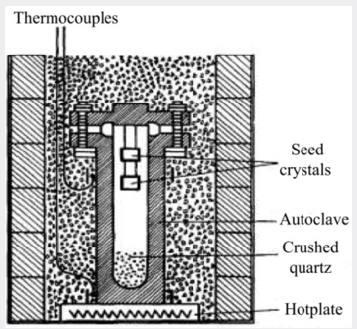
A schematic diagram of the apparatus used by the authors is shown in Figure 1. In what will be called the standard process, a steel autoclave constructed to withstand high pressures has seed crystals suspended from the lid and a supply of crushed meltinggrade quartz at the bottom. The autoclave is about 80% filled with a solution containing 88 g/L of sodium carbonate and sealed. The simple furnace used consists of a hotplate on which the autoclave stands surrounded by micaceous-flake thermal insulation. By this means a temperature gradient is established so that it is hotter at the bottom in the region of the nutrient crushed quartz than at the top where the seeds are located. Under the working conditions, the autoclave is filled with a single-phase fluid. The pressure developed being a function of the temperature and of the percentage of the space originally occupied by the solution at room temperature. The temperature at the base of the autoclave is controlled at about 400°C and the temperature at the seeds reaches equilibrium some 40°C lower. The temperature gradient along the length of the autoclave is not uniform, a fall of about 20°C occurring across the metal at the base and most of the remaining drop being across the nutrient. The space above the nutrient is approximately isothermal and the supersaturation in this region remains constant. Thus, crystals can be grown at approximately the same rate of growth in any part of the autoclave.

Figure 1: Diagram of apparatus for the growth of synthetic quartz.

Lupinepublishers-openaccessjournals-chemical-science

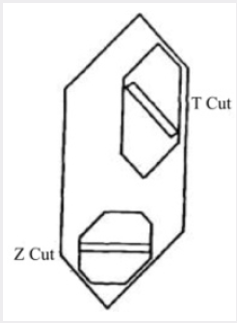
For a given design of the autoclave, the rate of growth is dependent on seed orientation, pressure, temperature and temperature differential. The seed orientation which has been adopted in most of the work to be described is the basal plane or Z-cut. Figure 2 shows the relation between this cut and the minor rhombohedral or T-cut which has also been used as a seed for the growth of synthetic quartz. It is shown subsequently that the seed orientation not only affects the rate of growth but also has a marked effect on the way in which impurities are incorporated in the crystal. It is most convenient to control the rate of growth by means of the temperature difference and this is done by adjusting the flow of solution but not exceed a certain maximum, which, for the conditions used in the standard process, is about 0.5mm/day on each side of the seed measured in the direction of the optic axis. In fact, the visual quality is in some respects a misleading criterion and the measurements of the mechanical damping recorded in Table 1; show that a progressive improvement in crystalline perfection takes place as the growth rate is reduced. As it happens, for most practical applications the quality corresponding to 0.5mm/day is adequate but for especially stringent requirements it may be necessary to employ a lower growth rate or an alternative growing technique. A small pilot plant has been set up to grow crystals by the standard process. A growth of 15mm takes place in a period of about a month, the resulting crystals weighing about 135g.

Figure 2: Relationship between crystals grown on the basal plane (Z-cut) and the minor rhombohedral plane (z-cut).

Lupinepublishers-openaccessjournals-chemical-science

Table 1: Mechanical damping of quartz

Lupinepublishers-openaccessjournals-chemical-science

Results and Discussion

Influence of impurities

The standard process recrystallizes a low-grade quartz-which due to size and imperfections such as twinning is unsuitable for piezoelectric use into crystals of a size and quality which are ideally suited to this purpose. However, the melting grade quartz used as nutrient still has to be imported and considerable work has been carried out over the last 5 years to develop processes which can be used with relatively impure nutrient materials. Reasonable success has been obtained using flint and a variety of quartzites. Early in this investigation it was found that quartz could be grown on Z-cut seeds using impure nutrient materials, but that the quality, particularly of large crystals, was not good enough for piezoelectric use. It is now known that the poor quality is due to the incorporation of impurities in the synthetic crystal during growth. However, it was found that it was possible to grow crystals of piezoelectric quality by modifying the solution in which the crystals were grown. Good crystals have been grown from flint and impure quartzite by using a solution containing 40g/L Na2CO3, 33g/L NaOH, and 3.4g/L NaF. Further examination of a number of different quartzites showed that many of them could be used satisfactorily with the standard process; these are referred to as class A quartzites. It is now known that the difference between class A and class B quartzites (class B being those quartzites which require the modified process) lies in the type of accessory minerals which are associated with the quartz. In particular, the structure of the feldspar, which is commonly the primary accessory mineral in quartzites, plays an important role in deciding whether the material will be class A or B [7,8].

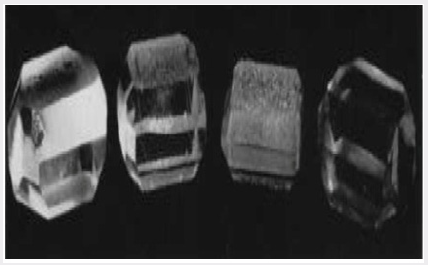
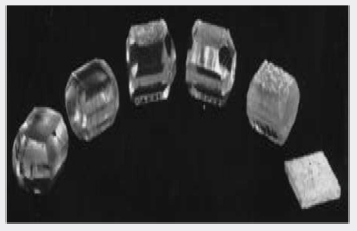
Work by Dickson et al. [9] using a paramagnetic resonance technique has shown that aluminum is the impurity which affects the quality of synthetic quartz crystals grown from class B materials using the standard sodium carbonate solution. This result has been corroborated by spectrographic analysis on a number of specimens. In addition, the direct test has been made by deliberately adding aluminum in a number of forms along with a pure quartz nutrient. Such adulterated quartz now acts as a class B nutrient and crystals grown from it using the standard solution have the habit and poor quality of a crystal grown under similar conditions from flint or a class B quartzite. Further, by using the modified solution, the defects can again be overcome. Figure 3 shows four crystals which illustrate this result. The crystals from left to right were grown from nutrients and in solutions. The most notable feature which can be seen from the photograph is the nature of the growth surface approximating to (0001). This surface is smooth on the crystals grown from quartz in sodium carbonate solution and from quartz with aluminum in the modified solution, but it is rough and pitted in the case of the crystals grown from flint and from quartz with aluminum, in sodium carbonate solution. It will be shown that the nature of the growth surface is closely related to the manner in which aluminum is incorporated in synthetic quartz grown on Z-cut seeds.

Figure 3: Crystals grown to illustrate the importance of aluminum as an impurity in low-quality nutrients.

Lupinepublishers-openaccessjournals-chemical-science

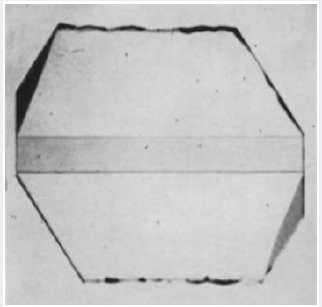
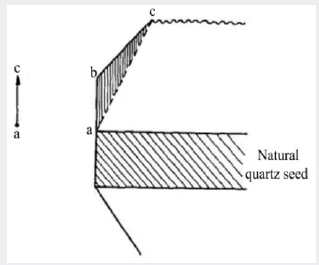
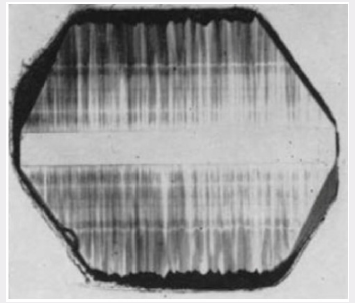
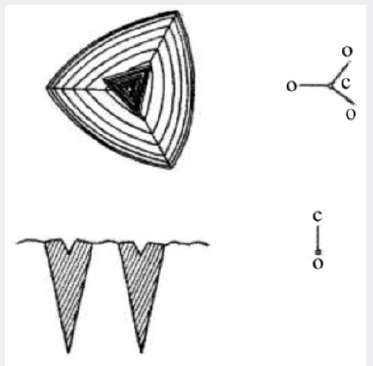
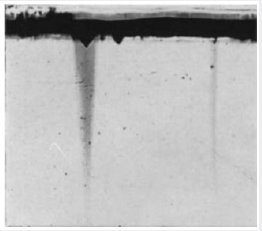
It has been known for some time that when natural quartz is irradiated with X-ray or any other ionizing radiation, the material darkens. Grasse et al. [10] studied this phenomenon in detail and showed that the darkening produced in natural quartz is often non-uniform showing a banded structure. The darkening occurs in sheets parallel to the major rhombohedral planes and is therefore connected with the growth of the crystal, probably being associated with changes in the environment in which the crystal grew. When large crystals of synthetic quartz were first grown by the authors, their behavior under X-irradiation was determined. Figure 4 shows the result of irradiating an X-cut section of a synthetic quartz crystal grown on a Z-cut seed. It can be seen that the central region corresponding to the natural quartz seed has darkened uniformly and that there are two regions beneath the minor rhombohedral faces which have also darkened rather more intensely than has the seed. The remainder of the synthetic growth has not darkened under this dose. The diagram in Figure 5 shows the region under the minor rhombohedral face on a larger scale. The triangular region abc corresponds to growth which has taken place on the minor rhombohedral face as it develops. Spectrographic analyses of material taken from various regions of a number of crystals grown by the standard process have shown that the total aluminum concentration in the growth on the Z-cut orientation is commonly less than 40 parts in 106 atomic replacements. However, in the growth under the minor rhombohedral face the aluminum content may be 10 times this figure, i.e. 400 parts in 106. The impurity content of the melting-grade nutrient lies between these two figures and the low aluminum concentration in quartz grown on a Z-cut seed is in part due to the “scavenger action” of the growth on the minor rhombohedral faces which are formed during the growth. This also illustrates a general result found in the growth of synthetic quartz, namely that it is easier to introduce impurities during growth on the minor rhombohedral face than on the basal plane.

Figure 4: Photomicrograph of an X-cut section from a synthetic quartz crystal grown on a Z-cut seed from a pure melting-grade quartz nutrient after X-irradiation.

Lupinepublishers-openaccessjournals-chemical-science

If, however, there is a large excess of aluminum in the system, it is found that the crystals grown on the basal plane will darken readily in a characteristic way as shown in Figure 6. In addition to the darkening of the seed crystal and the growth under the minor rhombohedral face, there is darkening of the primary growth in the form of distorted narrow-angled cones directed along the c-axis. These cones terminate in the rough, pitted growth surface and are apparently associated with the pits. This can also be seen from the bands which run parallel to the seed surface. These bands which are regions of either more or less intense darkening than the surrounding material are reproduced precisely on both sides of the seed. It can, therefore, be deduced that these bands are produced either by changes of the temperature or pressure in the autoclave or, what is more likely, by changes in the concentration of aluminum in the solution. These bands will therefore represent the nature of the growth surface at the particular time when they are formed. The discontinuities in these bands tend to follow the boundaries between the cones of darkening.

Figure 5: Diagram showing the X-ray darkening of quartz deposited in the accessory growth on the minor rhombohedral face.

Lupinepublishers-openaccessjournals-chemical-science

Figure 6: Characteristic X-ray darkening pattern found in an X-cut section of a synthetic quartz crystal grown on a Z-cut seed in the presence of a large excess of aluminum.

Lupinepublishers-openaccessjournals-chemical-science

Mechanism of growth

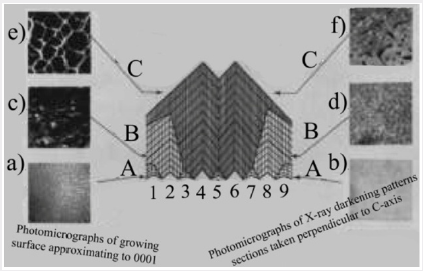
The characteristic cone darkening structure can be used to obtain a model for the mechanism of growth on the basal plane. This is illustrated in Figure 7. It is assumed that growth takes place independently on a large number of centers in contrast to growth on a habit face where only a limited number of centers are active and growth takes place by sheets spreading across the growth surface. The growth centers on the basal plane may be associated with spiral dislocations but there is, as yet, no direct evidence for growth spirals. If it is now assumed that quartz is deposited on the individual centers at different rates it will be seen that those which are growing faster overtake their more slowly growing neighbors and render them inactive. In the schematic diagram in Figure 7, all nine centers are active at the beginning of the growth; at later stage only centers 2, 4, 6 and 8 are active and eventually only centers 4 and 6. If the aluminum incorporation is uniform on any one growth centre but differs from one to the next, it will be seen that this gives rise to the characteristic darkening pattern. Figure 7 also shows photomicrographs of the growth surfaces at various stages in the growth together with darkening patterns at similar stages for sections cut perpendicular to the c-axis. The individual “cobbles”, which are the termination of the growth cones in the surface of the crystal, and the tine structure in the darkening patterns both tend to become coarser as the growth proceeds. This is in agreement with the suggested growth mechanism.

Figure 7: Illustrating the mechanism of growth of synthetic quartz on Z-cut seeds.

Lupinepublishers-openaccessjournals-chemical-science

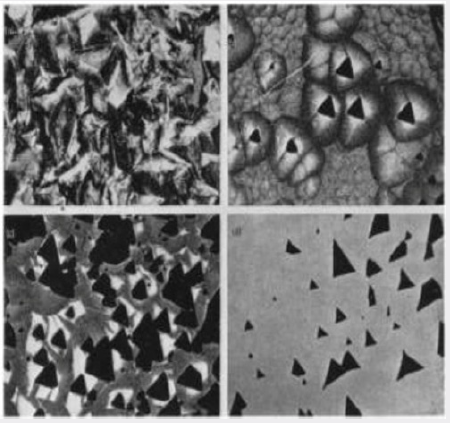
The nature of the rough, pitted growth surface obtained when quartz is grown on the basal plane in the presence of a large excess of aluminum cannot be directly explained in terms of the suggested mechanism. Figure 8a is a photomicrograph of the surface and shows clearly that the pits have no obvious crystallographic orientation. However, crystals have been grown with only just sufficient aluminum present in the system to commence the incorporation of aluminum by the above mechanism. In this case, the aluminum apparently only goes into the growth on isolated centers and produces a growth surface of the type shown in Figure 8b. It will be seen that certain of the larger cobbles have triangular pits at their centre. The relation between these pits and the rough growth surface produced by a large excess of aluminum is shown in Figure 8c and 8d. Figure 8c shows the growth surface of a crystal grown in the presence of a somewhat larger concentration of aluminum than that of Figure 8b. The pits are here more numerous and are commencing to overlap so that they interfere and lose their obvious crystallographic orientation. The crystal shown in Figure 8d has a rough surface similar to that in Figure 8a and has been lapped to remove most of the disturbed surface. The bottoms of the pits of the rough surface show approximately the same form as those in Figure 8b. The characteristic rough surface is, therefore, formed from a large number of pits which overlap and interfere until the shape and symmetry of the pits is completely lost.

Figure 8: The nature of the rough growth surface formed in the presence of a large excess of aluminum. (a) Rough growth surface. (b) Isolated pits. c) Interfering pits. d) Rough surface after most of the damage has been removed by lapping.

Lupinepublishers-openaccessjournals-chemical-science

Figure 9: Diagram of a pit formed at the center of a growth cobble.

Lupinepublishers-openaccessjournals-chemical-science

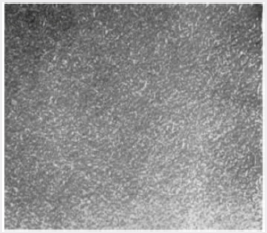
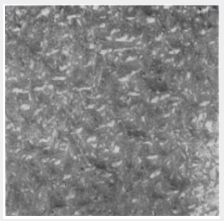
The nature of the individual pits is more readily seen by reference to Figure 9, which shows a diagram of a single cobble and its pit. The sides of the pit form reasonably flat faces which have been indexed using a microscope. The reason for the formation of such a high index face, if it is a true face, in the presence of excess aluminum is not understood. Figure 9 also shows a section containing the c-axis. If as appears likely, the pit is associated with the incorporation of aluminum, on irradiating such a section the growth cones giving rise to the cobbles with pits at their centers will darken readily. This is shown diagrammatically in Figure 9 while Figure 10 shows a photomicrograph which clearly illustrates this phenomenon. It has been seen that when crystals are grown in a large excess of aluminum, this aluminum is not incorporated uniformly in the crystal as it grows but is taken up preferentially on certain centers at the expense of the neighboring centers. As the lattice spacing will be a function of the aluminum concentration, it is reasonable to expect that strains will be set up at the boundaries between regions of different aluminum content. This strain can be seen readily by examining sections cut either parallel to or perpendicular to the c-axis in a polarizing microscope between crossed nicols. Parallel to the c-axis there are deep fissures found under the rough growth surface where the stress exceeds that necessary to produce fracture. Instead of the crystal appearing dark as it should in the extinction position, the field is crossed by bands of light and dark produced by the strain. The same phenomenon is, perhaps, more readily studied by examining sections cut perpendicular to the c-axis. Depending on the angle between the polarizer and analyzer the section should appear to be a uniform color when viewed in white light. Instead, a section cut from a crystal which has non-uniform aluminum incorporation will have a mottled appearance. This is shown in Figures 11 & 12, which are photomicrographs of two sections of the same crystal, Figure 11 being taken near the seed crystal and Figure 12 near the end of the growth. This again illustrates the way in which the number of active growth centers decreases during the growth. In this particular example, the density of active centers has decreased by a factor of the order of 20 in about 5mm of growth along the c-axis.

Figure 10: Photomicrograph of an X-cut section showing the relationship between the cones of darkening and the pits.

Lupinepublishers-openaccessjournals-chemical-science

Figure 11: Strain pattern observed in crossed nicols in a Z-cut section of a crystal containing a large excess of aluminum (Section taken near seed/growth interface).

Lupinepublishers-openaccessjournals-chemical-science

Figure 12: As Figure 11, Section taken near end of growth.

Lupinepublishers-openaccessjournals-chemical-science

Comparison of the results of experiments in which crystals are grown on Z-cut seeds in the presence of high and low concentrations of aluminum shows that the mechanism by which aluminum is incorporated in the growing crystal is dependent on the concentration of impurity in the system. This has been studied more closely by a set of controlled experiments in which the concentration of aluminum, added as y-alumina, was steadily increased. Six crystals grown in the presence of aluminum deliberately added to the nutrient in proportions varying from 0.05 to 2.50% by weight are shown in Figure 13. The concentration of aluminum added to the nutrient for the six crystals numbered 1 to 6 from left to right is given in the caption. Examining the nature of the growth surface, it will be seen that the first two crystals show no obvious signs of the inclusion of aluminum. By contrast, crystals 3-5 show the characteristic rough growth surface, crystal 5 being so strained that the growth is hardly single crystalline. With 2.5% aluminum added to the nutrient (crystal 6) all growth is prevented. Further experiments carried out using concentrations of aluminum in the range 0.10-0.25%, show that the results are not consistent, in that a number of experiments carried out with the same aluminum concentration sometimes give a rough growth surface corresponding to non-uniform impurity incorporation and at other times give the smooth cobbled surface of the pure crystal. This behavior can be explained in terms of the suggested growth mechanism as follows in this paragraph. For low concentrations of aluminum in the system, the incorporation apparently takes place uniformly. Most of this aluminum is probably interstitial as the material only darkens slightly under X-irradiation. For high concentrations, it has been seen that the aluminum is taken up preferentially on certain growth centers. This can be understood, when it is considered that the energy required introducing an impurity atom is a function of the number of impurity atoms already incorporated in the growth on this centre. As the number of impurity atoms incorporated increases, the distortion of the lattice becomes greater and it becomes easier to include more impurity atoms. Thus, once the concentration of aluminum in the growth on a given centre exceeds a certain figure, further aluminum atoms will tend to be taken up preferentially on this centre at the expense of the neighboring centers. In a physical system of this type, the probability that non-uniform inclusion will take place and is a rapidly changing function of the concentration of impurity in the nutrient. It can be seen that this qualitative analysis explains the observations. For low concentrations of aluminum, the probability of non-uniform take-up is very small. As the concentration is increased the stage is reached where there is a reasonable chance that the aluminum is incorporated non-uniformly. This is the region where the results will not be consistent. At still higher concentrations, non-uniform inclusion will be the rule.

Specimens cut from the crystals shown in Figure 13 have been analyzed for aluminum and sodium using spectrographic and flame photometric techniques, respectively. The results are given in Table 2 in terms of the percentage atomic replacement of silicon by these elements have showed that the concentrations of sodium and aluminum are of the same order for low concentrations of aluminum added to the nutrient. This can be attributed to the sodium content tendency to saturate while the aluminum content continues to increase. It seems reasonable to conclude that the substitutionally added aluminum is associated with a sodium atom situated interstially. This centre would be responsible for the visible darkening produced by X-irradiation [11], a model consistent with that suggested by Ratheneau [12]. The excess aluminum found when the concentration added to the nutrient is large, could be present either as interstitial atoms or as two substitutional atoms associated with an oxygen vacancy. There is, at present, no evidence to distinguish between these two alternatives. In discussing the incorporation of impurities in synthetic quarts, some mention must also be made of work which has been carried out in attempts to include impurities other than aluminum [13]. It is well known that small monovalent ions in particular lithium and sodium can readily be introduced into the quartz lattice under the action of an electric field. These ions lie interstitially in the “tunnels” which are parallel to the c-axis in the quartz structure. It has already been shown that sodium is present in all synthetic quartz grown by the authors. Attempts have been made to introduce a number of other elements which might be expected to substitute for silicon in the lattice. In general, it has been found extremely difficult to introduce impurities into quarts grown on the basal plane. This result would appear to be different from that found by other workers in this field who have used seeds cut parallel to the minor rhombohedral face. In addition to aluminum, attempts have been made to incorporate the elements in growth on Z-cut seeds. Of these elements only, germanium has been successfully incorporated. Bearing in mind the similar ionic radii of silicon and germanium, it is not surprising to find that germanium will readily go into quartz as a substitutional impurity. Large amounts of germanium can be taken up by the quartz lattice without setting up measurable strain. As would be expected, the centre is not sensitive to X-irradiation. It is interesting to note that boron is not taken up, although its small size and its valence of three would, at first sight, make it an ideal atom for incorporation in the quartz lattice. No explanation is known for this behavior.

Figure 13: Crystals grown in the presence of increasing concentrations of aluminum. Aluminum by weight of quartz nutrient: (1) 0.05%, (2) 0.125%, (3) 0.25%, (4) 0.50%, (5) 1.25%, and (6) 2.50%.

Lupinepublishers-openaccessjournals-chemical-science

Coloration

A striking example has been the growth of intensely colored emerald green quartz, a variety which does not occur naturally. From the circumstances in which this crystal was grown, it has been deduced that the coloration is produced by the presence of a trace of chromium [13]. This diagnosis has still to be confirmed. The coloration in this crystal is very stable, being unaffected by heat treatment up to the a-ß inversion temperature or by prolonged X-irradiation. Preliminary transmission measurements show that the material has an apparent cutoff in the ultraviolet at 2800 Ǻ. It appears likely that this synthetic material is not related to the “greened” amethyst described by Samoylovich [14].

Table 2: Sodium and aluminum concentrations in synthetic quartz grown in Na2CO3 solution on Z-cut seeds in the presence of aluminum.

Lupinepublishers-openaccessjournals-chemical-science

Conclusion

The recent investigation, still incomplete, has shown that the nature of the cation in the solution from which the crystals are grown can have a considerable effect on the way in which impurities are incorporated in synthetic quartz. An investigation of the type described can be of value to the worker studying color centers in quartz in a number of ways.

a. The process described for the growth of large crystals of synthetic quartz can provide material with total impurity content, and particularly substitutional aluminum content, lower than is found in natural quartz. This is of value to the worker, studying radiation damage in quartz. With regard to the substitutional aluminum content, it must be noted that the concentration in a number of specimens grown under nominally similar conditions will differ slightly and partly as a result of the statistical nature of the process and also as a result of variations in the purity of the nutrient.

b. Controlled amounts of the impurities present in natural quartz can, in certain instances, be introduced. This can be of considerable assist in identifying the nature of those color centers which are impurity-dependent.

c. By the introduction of impurities not found in natural quartz, material with new properties can be grown. For example, if sufficient chromium can be introduced into the green quartz it may be possible to obtain quartz which is paramagnetic.


For more Lupine Publishers Open Access Journals Please visit our website: https://lupinepublishersgroup.com/

For more Open Access Journal on Chemistry articles Please Click Here:
https://lupinepublishers.com/chemistry-journal/

To Know More About Open Access Publishers Please Click on Lupine Publishers

Follow on Linkedin : https://www.linkedin.com/company/lupinepublishers
Follow on Twitter   :  https://twitter.com/lupine_online

Friday, 11 September 2020

Lupine Publishers | Association Between Schiffs and Mannich Bases of 5-Substituted-1h Indole-2, 3 Diones and Evaluation of Antiepileptic Activity: Findings from PTZ Model Casual Pathway-Based Multi-Site Recruitment

Lupine Publishers | An archive of organic and inorganic chemical sciences

Abstract

We report here novel Schiff bases of 5-substituted-1H Indole-2, 3 Dione comparing modified with aromatic primary amine and hydrazine. A recombinant with Mannich base has been synthesized. A structure of the synthesized compounds was analyzed for structure confirmed by mass spectral data. Compound 1a-p has screened for anti-convulsant activity, increased in latency time and reduction in duration of convulsion and standard drug when compared, sodium valporate 300mg/kg. PTZ dose of 90mg/kg produced severe clonic convulsions in 88% of the mice injected, with a mean onset time of 3.61 ± 0.5 min and 80% mortality. Clonic convulsive activity lasted 2.3±0.45 min and has postictal period of decreased motor activity and subsequently. Test result revealed that compounds at dose of 300 mg/kg, the severity and duration of the convulsive episode following PTZ has not observed.

Keywords: 1H Indole-2, 3 Diones; Schiffs base; Mannich base; Anti-convulsant

Introduction

Epilepsy has accepted group of disorders in which there are recurrent episodes of altered cerebral function associated with paroxysmal excessive & hypersynchronus discharge of cerebral neurons [1]. The clinical accompaniments of those episodes seizures vary in manifestation from brief lapses of awareness to prolonged bouts of unconsciousness incontinence. It has episode of neurological dysfunction a seizure. Isatin (1H-indole-2, 3-dione) and scaffold demonstrated a diverse array of biological activities. It has 5-halo derivatives have reacted to form the Schiff’s base, Mannich bases to form C-N, C=N bonds, from the spectral studies, Isatin undergo reaction at C-3 and N-1 position and showed the anti-convulsant activity.

R & D of Iso nitroso acetanilide (Scheme I)

In round bottom flask took 9g (0.05 moles) of chloral hydrate in 86 mL of water added mixture 7g of sodium sulfate and solution of 3.1g (0.03moles) of aniline (4-halo substituted derivatives) in 30mL of water containing 4-5 mL of HCl added (dissolved amines). Finally, the solution of hydroxylamine in 50 mL of water added in the flask. Heat the mixture at 45 0C to dissolved precipitate and then boiled the solution vigorously for 1-2 min. Cooled the solution to room temperature. The precipitate obtained has filtered off. The yield has 80% (Scheme 1).R & D of 5-Substituted-Indole-2, 3 Dione (Scheme I)

Heat the 3 mL of concentrated Sulphuric-acid at 70 0C. To this added 1 g of iso nitroso acetanilide with vigorous stirring. Heat the mixture to 80 0C for 1-2 min. Cool the mixture at room temperature. Added the 3-4 piece of ice or crushed ice having volume 3-4 times greater than the mixture with vigorous stirring, Yields was 72% melting point of different 5-substituted Isatin. 5-Cl- Isatin- 254-256Co, 5 NO2-Isatin- 180-182 Co, 5-Fl-Isatin-224-226 Co, 5-I-Isatin-280-282 Co, 5-CH3-Isatin- 264-266 Co.

R & D of Schiff’s bases of different 5-substituted 1-H-indole -2, 3-dione (Scheme II) (1a-p)

Equimolar quantities (0.004 mol) of isatin/5-substituted isatin and the aromatic primary amine/hydrazine has dissolved in 10 mL of warm ethanol and heated on a steam bath for 20-40 min. standing for approximately 24 h at room temperature, the crystalline product has separated by filtration, vacuum dried and recrystallized from ethanol (Scheme 2).

R & D of different Mannich base from Schiff’s base of different 1-H-Indol -2, 3-Dione (Scheme II) (1a-p)

Molar absolute (0.004 mol) of diphenyl amine in 10mL of ethanol has added to slurry containing the appropriate isatin and aqueous formaldehyde solution dissolved in 10mL of ethanol. The reaction mixture has magnetically stirred for 1 h at room temperature and refrigerated for 48h. The product has separated by suction filtration, vacuum dried and recrystallized from ethanol. Final compound with their respective substitution of groups describe in Table 1 and physicochemical data of synthesized more novel 5-substituted 1-H-Indole-2,3-Dione described in Table 2.

Preparation of Solutions

The PTZ solution (90 mg/kg) has prepared in saline solution. Sodium valporate (300mg/kg), has used as standard drug. Various test compounds have suspended in carboxy methyl cellulose (0.5%), suspensions have prepared freshly prior to the dosing.

Selection of Animals

Albino female mice of Wister strain weighing around 25- 35gm has collected and housed at the animal house in groups of six animals per cage at standard laboratory conditions at room temperature with 12:12 h light and dark cycle. All the animals have fed on standard laboratory diet and free access of water. The scientific animal ethical committee approved the present animal protocol [2]. The selected animals have kept in the cages for a week prior to dosing for all the limitations of the laboratory conditions.

Acute Toxicity Studies

LD50 of test compounds have performed as per the O.E.C.D guideline 423. Test compounds have suspended in 0.5% CMC solution. The compounds have administered orally at a dose level of 500,750 1000 and 1500 mg/kg body weight, to groups of 6 animals. After administration of test compounds, the mice have observed for gross behavioral neurological autonomic and toxic effects (3). The toxicological effects have observed in terms of mortality. No death occurred within 24h of dose of 500 and 1000mg/kg but at a dose of 1500mg/kg 50% mortality was observed. As dose was increased further up to 4000mg/kg, total mortality was found. Hence 1000 mg/kg dose was considered as LD50. 1/10th of the LD50 was considered as an effective dose i.e.150 mg/kg.tg

Evaluation of antiepileptic activity (PTZ model)

The compounds synthesized in the present investigation has subjected to pharmacological screening, to ascertain their anticonvulsant activity. The anti-convulsant activity was evaluated by using PTZ induced convulsion mice models [4,5]. In this method convulsion produce by intraperitoneal administration of pentylinetetrazole (PTZ) solution prepared in saline (90mg/ kg, 10mL/kg) was recorded over a period of 30 min, after pentylinetetrazole injection. The mice were treated orally with test (50,100,150,300mg/kg) suspended in 0.5% CMC or standard drug (sodium valporate 300 mg/kg, diazepam 4mg/kg, phenytoin 30mg/ kg), 30 min before i.p. injection of pentylinetetrazole. The time of convulsant recorded and permitted to express the protection of mice. The evaluations of anti-convulsant of the compounds has been listed in Table 3.

Statistical Analysis

All the results have expressed as Mean + S.D and has subjected to student t-test using Graph-pad prism 4 software. Values have considered as significant when P< 0.05.

Results and Discussion

Synthesis of 5-substituted-1H Indole-2, 3 Diones have done by extended Sandmeyer method from Cl, NO2, I, CH3 and F aniline. The synthesized compounds have purified in ethanol. All these spectral analysis data showed the authenticity of the structure of the synthesized compounds. The mass spectra of compounds 1a-p showed molecular ion peaks M+ at m/z corresponding to their respective molecular masses, which agrees with their respective molecular formulas recorded in the Table 4. Anticonvulsant activity of the compounds 1b, 1c, 1f, 1h, 1j, 1l, 1m, 1n, 1o, 1p has examined using PTZ induced convulsion mice models. In this method convulsion produce by intraperitoneal administration of pentylinetetrazole (PTZ) solution prepared in saline (90mg/ kg,10 mL/kg) has recorded over a period of 30 min, after pentylinetetrazole injection. The mice have treated orally with test (50,100,150,300mg/kg) suspended in 0.5% CMC or standard drug (sod. valporate 300 mg/kg), 30 min before i.p. injection of pentylinetetrazole. The time of convulsant recorded and permitted to express the protection of mice. The evaluations of anti-convulsant of the compounds have listed in Table 5.

Conclusion

It can be concluded that the Schiff and N-Mannich base of 5-substituted-1H Indole-2, 3 Diones has synthesized easily. The pharmacological screening has done by pentylenetetrazole (PTZ) induced convulsion method, for this Sodium. Valporate (300 mg/ kg) has used as reference standard. Test compound has given to mice in different doses (50,100,150,300 mg/kg). The result suggested that all the compounds possess good anti-convulsant activity with increased in latency time and reduction in duration of convulsion as like the standard drug when compared Table 3. All tested compound shows moderate effect at 150 mg/kg dose and significantly effective at 300mg/kg dose. It concluded that the synthesized Schiff and N-Mannich isatin derivatives have shown excellent anti-convulsant activity.

https://lupinepublishers.com/chemistry-journal/pdf/AOICS.MS.ID.000165.pdf

https://lupinepublishers.com/chemistry-journal/fulltext/association-between-schiffs-and-mannich-bases-of-5-substituted-1h-indole-2-3-diones-and-evaluation-of-antiepileptic-activity-findings-from-ptz-model-casual.ID.000165.php

For more Lupine Publishers Open Access Journals Please visit our website: https://lupinepublishersgroup.com/

For more Open Access Journal on Chemistry articles Please Click Here:
https://lupinepublishers.com/chemistry-journal/

To Know More About Open Access Publishers Please Click on Lupine Publishers

Follow on Linkedin : https://www.linkedin.com/company/lupinepublishers

Follow on Twitter   :  https://twitter.com/lupine_online


Prediction of Physico-Chemical Properties for Polycyclic Aromatic Hydrocarbons Based on Electronic Characteristics of Molecules

Abstract QSPR models have been developed to predict of polycyclic aromatic hydrocarbons (PAHs) based on quantum chemical and integr...